
Osceola County Arrest Warrants Explained
Iowa Code section 804.1 lays out the main probable-cause route for Osceola County arrest warrants. A criminal case often starts when someone files a complaint before a magistrate. The complaint has to name a public offense within that officer's authority. If the complaint or its supporting affidavits give reasonable grounds to believe the offense happened and that the named person committed it, the magistrate can issue an arrest warrant unless some other process fits better. In certain situations a citation replaces a warrant entirely. The order itself comes from the unified Iowa District Court, never from an online list. District judges, district associate judges, and judicial magistrates each act within their assigned authority. The clerk keeps the docket and the filed papers. Once issued, the warrant directs a peace officer to arrest the person and bring them before the court. A docket entry you can see online helps, but the actual order and the latest court event are what control in Osceola County.
Osceola Arrest Warrant Issuance Path
Osceola County arrest warrants can grow out of more than one charging path. A complaint with an affidavit can go to probable-cause review under chapter 804. A formal indictment or information can instead produce the statewide Rule 2.36 Form 6 warrant. That form records when the charging instrument was filed, the offense and its statute, the court's command, and the authority of the judge or clerk who signed it. Think of the sequence in stages. Complaint, affidavit, or formal charge; review by an authorized Iowa District Court judicial officer; issuance; filing with the clerk; service by a peace officer; then a return, a court appearance, or a later order. This timeline is why neither the sheriff's site nor a custody roster captures the whole issuance record. The court builds and keeps the judicial record. Law enforcement handles the service.
Inside an Osceola County Arrest Warrant
The official blank Form 6 offers a safe field inventory without exposing any real person's data. Not every field on an Osceola County arrest warrant is open to the public, particularly before service. When you do obtain a document, match it to the docket by county and criminal case number rather than trusting a name alone.
| County and case number | Osceola County and the criminal case identifier linking the warrant and docket. |
|---|---|
| Charging event | The date of a complaint, indictment, or information supporting the order. |
| Offense and statute | The charged offense and Iowa Code provision identified by the court. |
| Court command | Direction to an authorized peace officer to arrest and bring the person before court. |
| Issue authority | The issue date, judge signature, clerk or seal elements, and court identity. |
| Bail endorsement | An optional amount or release direction when the court places one on the warrant. |
Osceola County publishes no warrant-number format of its own. So treat no local code as official, and never assume a case number doubles as a warrant number.
Osceola County Arrest Warrant Records
The Osceola County court page names the Clerk of the District Court as the local case-record contact. The office sits at 300 7th Street, Sibley, Iowa 51249, and its main phone is 712-754-3595. Ask staff for the present docket event, the issuing court, the next hearing, and the way to request an available filed document. That same official clerk page also carries the Judicial District 3 route and an online fine-payment link.
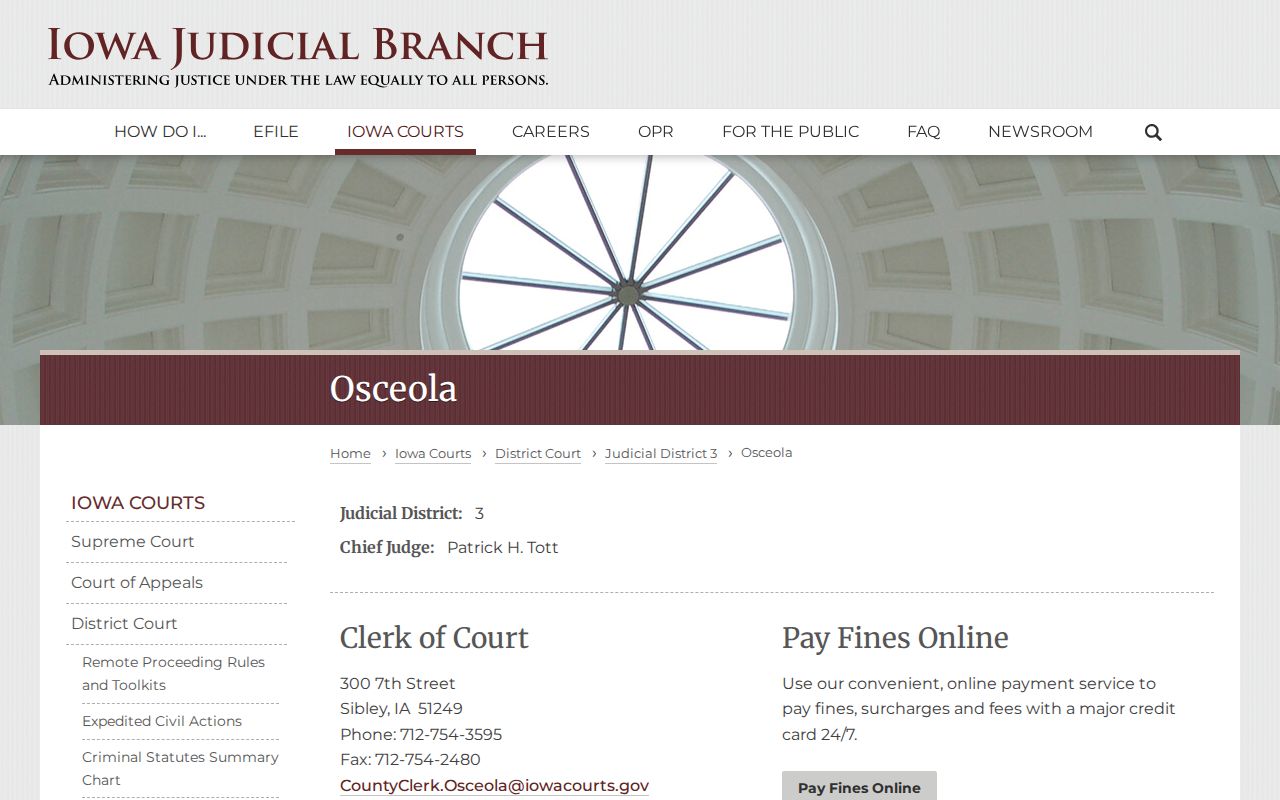
That contact block is the right route into an Osceola County court record. Staff can walk you through procedure, though they cannot pick a legal motion for a caller.
Clerk of the District Court
300 7th Street, Sibley, IA 51249
712-754-3595
Case dockets, filed documents, hearing information, and court procedure.
Serving Arrest Warrants in Osceola County
An arrest warrant commands a peace officer to arrest the named person and bring them before the court. In Osceola County, the Sheriff's Office is the main published county contact and runs the jail. Other city police, peace officers, or the issuing agency may also execute a warrant when legally authorized, so do not assume the sheriff serves every one. After service, the arresting agency handles booking or custody while the court takes up release under Iowa law. Chapter 811 permits several forms of release: personal recognizance, an unsecured appearance bond, cash, surety, or added conditions. What applies depends on the case and the judicial order. No local bond schedule, bond-window hours, or online Osceola bond processor is published, so exact terms must come from the clerk, the sheriff, or a judicial officer.
Call Before an Osceola Surrender
Learning of an Osceola County arrest warrant does not mean a walk into the jail ends in quick release. Start with the clerk to confirm the court event. Then call the sheriff at 712-754-2556 and ask whether the agency holds the warrant, whether the court must act first, where the person should report, and what identification or intake instructions apply. An attorney can weigh case-specific risk and ask about a voluntary appearance, surrender, or release request. The official jail information page covers general intake and facility rules, but it posts no warrant surrender schedule.
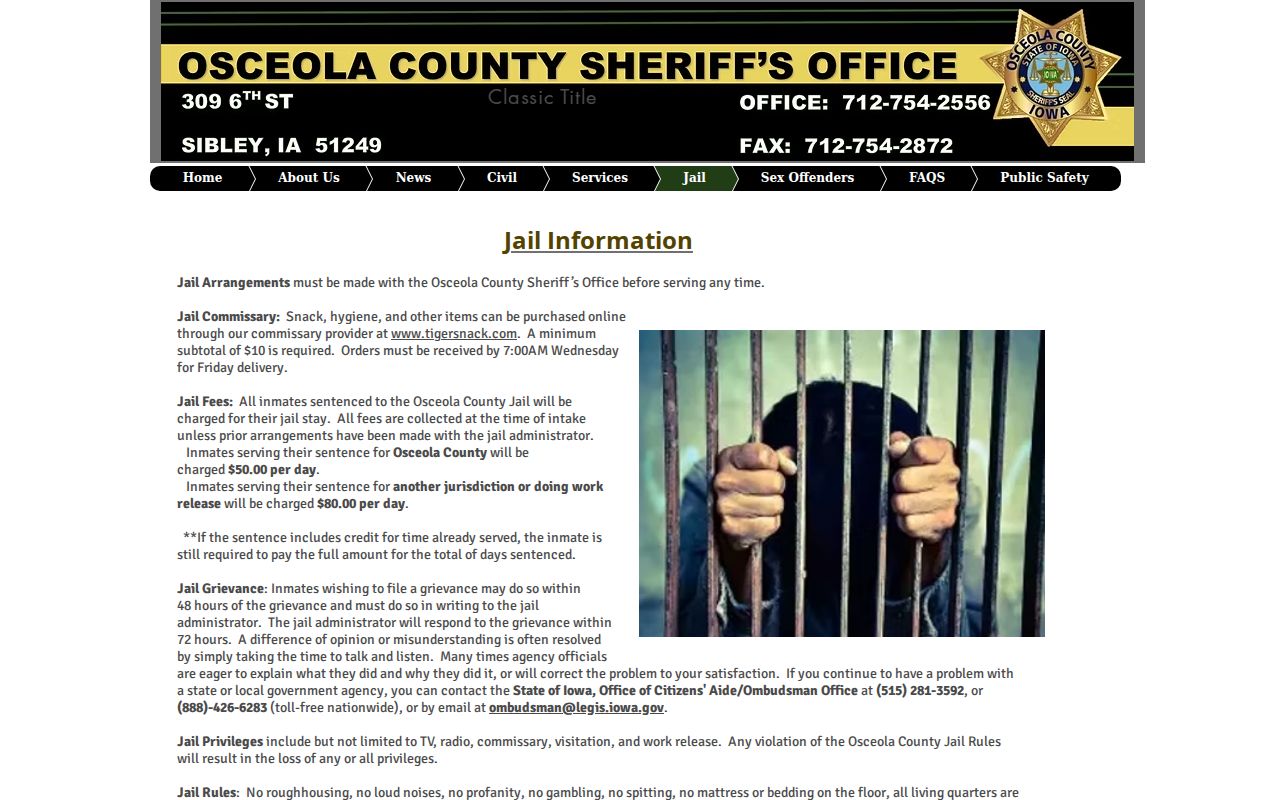
No posted warrant window exists, which is exactly why Osceola County callers should confirm directly before any trip to 309 6th Street.
Comparing Arrest, Summons, and Bench Warrants
One case file in Osceola County can hold very different orders. An arrest warrant follows probable cause or a formal charge, and it sends officers to take the person in. A summons skips that step and just sets a court date. A bench warrant is really an arrest order born of a missed hearing, sentencing, or some other duty owed to the court itself. Iowa's own docket wording tells you which event happened.
| Record | Basis | Immediate effect |
|---|---|---|
| Arrest warrant | Probable cause or formal charge | Authorizes a peace officer to arrest |
| Summons | Charge handled by directed appearance | Orders appearance on stated terms |
| Bench warrant | Missed or breached court duty | Authorizes arrest and return to court |
For deeper court-compliance detail, the Osceola County bench warrant search explains Iowa's failure-to-appear route.
Restricted Osceola Arrest Warrant Access
A blank search result in a warrant lookup does not settle the question. Iowa Judicial Branch guidance treats unexecuted search and arrest warrants as confidential, so an active Osceola County warrant can sit outside public view entirely. Other material stays hidden too: sealed files, protected investigative records under chapter 22, and juvenile cases under section 232.147. Dockets also lag, so a recent court or agency event may not appear yet. Start with Iowa Courts Online, the first public check. Search a case number, citation number, or legal name, and pick Osceola County when prompted. A blank or confusing result means a call to the clerk, not a conclusion. When you need a court document, the Judicial Branch public-records process routes the request to the county clerk and allows inspection at a courthouse public terminal. The restricted IOWA System serves criminal-justice agencies only. The public cannot log in.
Access rule: Public docket access is a starting point, not a complete or live Osceola County arrest warrant certification.
After Osceola Arrest Warrant Service
Service of an Osceola County arrest warrant does not close the case behind it. The docket may go on to show the arrest, the return to the court, a hearing, release conditions, bond, a recall or quash order, and the final outcome. The terms have distinct meanings. "Returned" means the service paper went back to the issuing court. "Recalled" means that court withdrew the warrant. "Quashed" means the court set it aside. Not one of those words, by itself, means the charge was dismissed.
- Personal recognizance
- Release on a promise to appear when the court allows it.
- Unsecured appearance bond
- A promise to pay a stated sum after a later failure to appear, without an up-front cash deposit.
- Service return
- The officer's record sent back to court after action on the warrant.
- Recall or quash
- A court action withdrawing or setting aside the warrant, while the case may remain open.
Keep the court order, the docket entry, and any receipt from the Osceola County case. Then confirm the change with both the clerk and the law-enforcement agency, since one database may lag the other.
If There's an Arrest Warrant for You
Start by confirming the warrant. Iowa Courts Online and the clerk can verify an Osceola County arrest warrant and tell you what court event exists and whether a hearing, a filed request, a bond decision, or an appearance is required. Then call the sheriff before going to jail. Ask about service, surrender, and any known hold. Third, talk with a lawyer about the safest lawful response. Court staff explain process, but they cannot pick a remedy or privately contact the judge for you. A lawyer can weigh a voluntary appearance, a surrender plan, a bond request, a reset, or a motion to recall or quash the warrant when that fits the case. Osceola County has no generic recall form or safe-surrender program. If the court sets bond, get the amount, the type, where it is posted, accepted methods, and the next hearing date from an official source. Paying money never dismisses the charge. Watch for scam calls demanding gift cards, cryptocurrency, or instant payment to avoid arrest. Iowa courts recognize the clerk, secure ePayment, and the published court payment phone line as the legitimate channels.
Act with care: Confirm the warrant, contact counsel, and call the sheriff before surrender because release terms and intake steps are case specific.